In 1970 Peter Frampton was playing the Fillmore West in San Francisco with Humble Pie, and his guitar was fighting him. Every time he leaned into a solo, his Gibson ES-335 answered with feedback. A friend named Marc Mariana lent him his own guitar for the night: a 1954 Gibson Les Paul Custom, one of the black ones collectors call Black Beauty, modified with three pickups.
Frampton played both sets on it. Then the next night too. The guitar did everything the other one refused to do, so he asked Mariana to name a price. Mariana would not hear of it. “No,” he said. “I want to give it to you.”
That Les Paul became his voice. It is on Humble Pie’s Performance: Rockin’ the Fillmore, and six years later it was on the cover of Frampton Comes Alive!, one of the best-selling live albums ever recorded. The guitar that seems to speak on “Do You Feel Like We Do”, through the talk box, is that one.
Then came November 1980 and a tour of South America. The band flew ahead; the equipment followed by cargo plane. The plane crashed on takeoff from Caracas, Venezuela, and everyone on board died. The guitar was listed among the losses, the least important one.
Except it had not burned. Four guitars were pulled from the crash site and quietly sold. The Les Paul ended up on the island of Curaçao, bought by a man who meant to learn to play and never did. It slept there for decades, until the man’s son took it to a local repairman for a look. The repairman, Donald Balentina, happened to be a customs agent who fixed guitars in his spare time. He studied it and understood exactly what was leaning against his bench.
Getting it home took a year and a half of patient diplomacy. In the end the government of Curaçao bought the guitar for five thousand dollars, and at the close of 2011 two men from the island flew to Nashville to hand it back to its owner. It arrived in a thin plastic cover, not even a proper case. Frampton did not need to look inside. “I knew before I even opened it that it was mine,” he said. Thirty-one years had passed. Gibson repaired what was broken and left the scars alone, and Frampton gave the guitar a new name: Phenix (yes, without the “o”). A phoenix, spelled his own way. Weeks later he walked onto the stage of the Beacon Theatre in New York with it. He plays it still.
I love this story. I also envy it a little, because I lost a travel companion too, and mine has not come back. No strings, no pickups. A wooden walking stick.
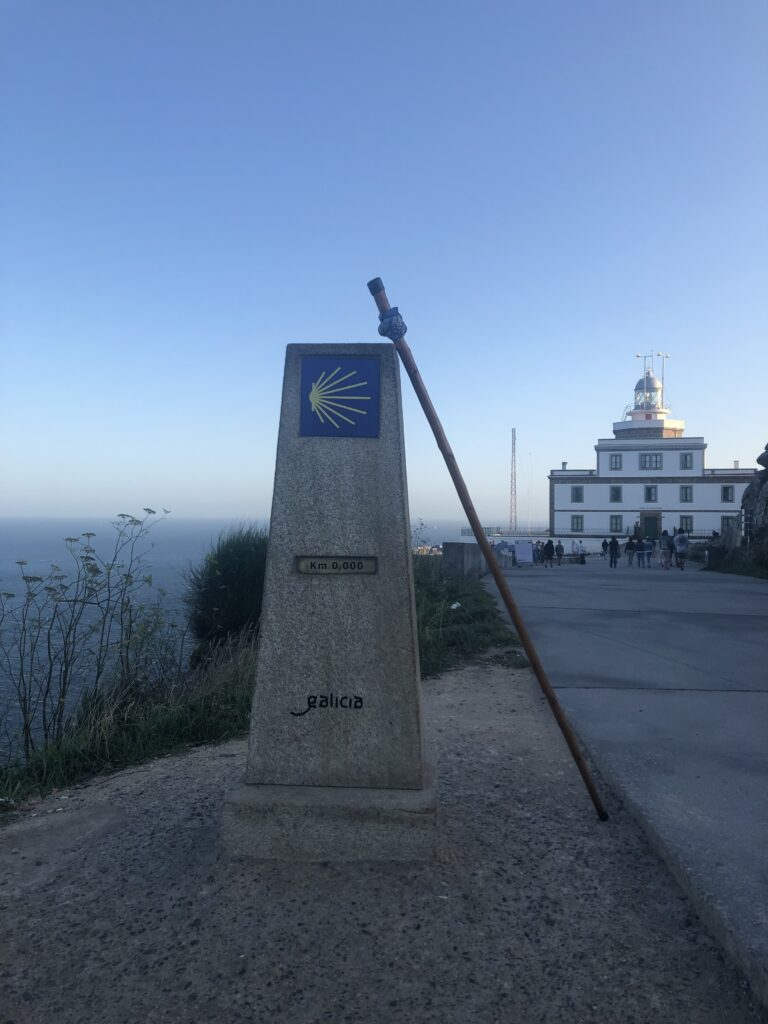
I bought him in 2015 in Saint-Jean-Pied-de-Port, in a small shop across from the pilgrim office, on the first day of my first Camino de Santiago. “Amore a prima vista”, as we say in Italy. Love at first sight. I almost lost him right at the start. The morning after the first night, at the hostel in Roncesvalles, on the Spanish side of the Pyrenees, I packed up and walked out without him. I was not used to his company yet. After a kilometer I felt lighter in the wrong way. Something was missing. I went back to get him. After that we were never apart. Not on the trail, anyway.
For the first few days he had no name. Then a fellow pilgrim caught me talking to him on the trail and laughed: “You look like the Cast Away character with Wilson.” She meant the volleyball Tom Hanks talks to when there is nobody else left to talk to. The name stuck. From day five onward, Wilson.
Wilson walked five Caminos (aka a few thousands of kilometers) with me. He took the weight on the descents and set the rhythm on the climbs. He listened to hours of monologues nobody else would have tolerated. And I had long hair at the time, so a man climbing a hill with long hair, a beard and a wooden stick gave off a kind of biblical vibe I always enjoyed. But I left form for substance a while ago.
After the fifth Camino, instead of carrying him onto the plane, I decided to ship him home from Fisterra, the end of the world. It seemed reasonable. The box never arrived. What followed were endless phone calls with the Spanish postal service, always useless. The parcel existed, somewhere. Nobody could say where. Someone would call me back, and nobody ever called me back. I carried Wilson across five Caminos without losing him once. Correos managed it on the first try.
I never had a wooden stick again. I have had trekking poles since, two of them, efficient, adjustable, forgettable. You do not name a trekking pole. You do not talk to one on a climb. And if you lose it, you just buy another. Nobody grieves for equipment.
Frampton waited thirty-one years. So I like to think Wilson is out there somewhere, leaning against a wall in a warehouse, waiting for his own customs agent, someone who fixes walking sticks in his spare time and pays attention to what passes through his hands. One day, hopefully, we’ll meet again.
I stopped calling Correos a long time ago. Pilgrims learn patience, and thirty-one years ain’t that long.
Wilson taught me the pace.
P.S. My then girlfriend walked the fourth Camino with me. She watched how I treated him, the cleaning, the washing, the polishing with olive oil on a daily basis. She used to say, half laughing: “I wish you treated me the way you treat Wilson.” I told her she was exaggerating. Maybe she wasn’t…
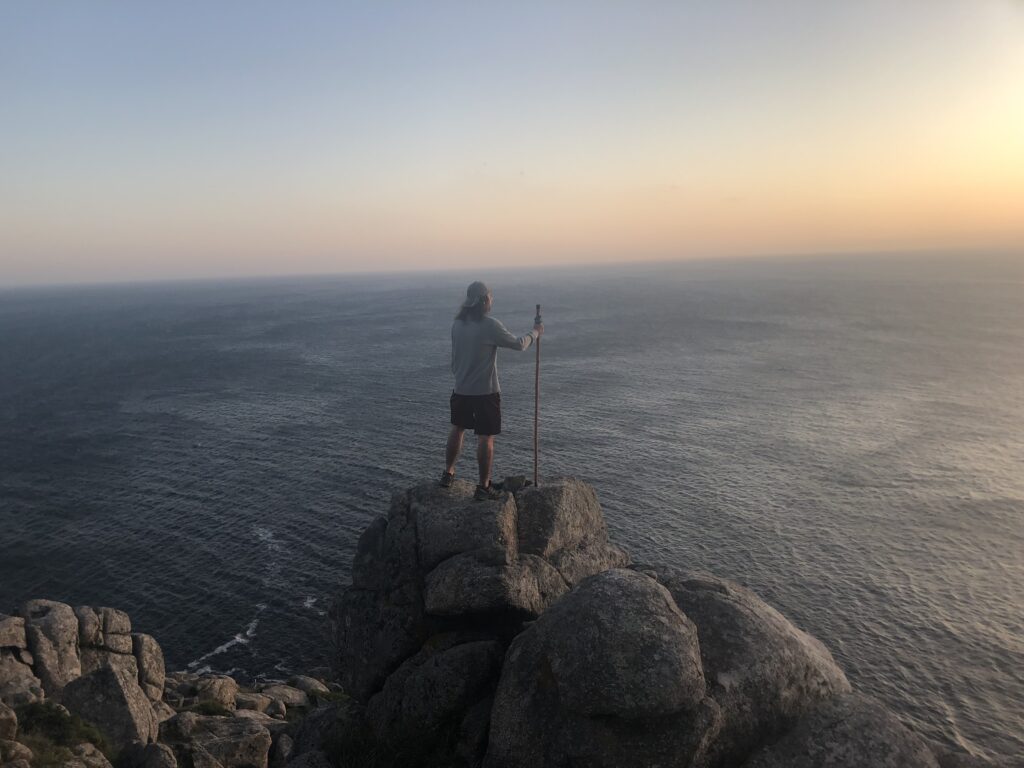
In our last day together..