On Thursday, Nvidia announced that Jensen Huang had resigned as chief executive, effective immediately, in the middle of a personal scandal and an internal investigation.
It is worth pausing on what that means. Huang did not simply run Nvidia. He co-founded it in 1993 and led it for more than thirty years, with around 60 people reporting directly to him and very few layers in between. And Nvidia is no ordinary company. It makes the chips most of the artificial intelligence industry runs on. It also invests in many of the companies that buy those chips: up to 100 billion dollars in OpenAI, up to 10 billion in Anthropic, a stake in CoreWeave, one of the clouds that rents out its GPUs. Supplier, investor, financier, partner. A good part of the AI economy is tied to Nvidia. And Nvidia, until Thursday, was tied to one man.
It took one week and a handful of allegations to remove the founder of one of the most important companies in the world. I will leave the gossip to the gossip columns. For me, it was the opening scene of a very strange week.
On Wednesday morning, here in Italy, a single email sent from a hacked university account reached around 6,000 schools with a bomb threat. Classrooms were emptied across the country. Nothing was found anywhere. On Thursday the emails came back: 3,778 schools reached, 77 evacuated. No bomb, no explosion. Just a few lines of text, and children standing in courtyards wondering what was going on.
On Thursday evening, Outlook simply stopped working, and so did a good part of Microsoft 365. For millions of people, the silence lasted into Friday. My own inbox kept working: in my company we happen to use Google. This time, I was lucky. Not a hack, Microsoft said. A network upgrade gone wrong.
And on Friday, the United States grounded every departing flight after a telecommunications failure at air traffic control. About 7,000 flights were delayed or cancelled. It was only the second nationwide ground stop since 11 September 2001.
An email, a man, a network upgrade, a telecommunications failure. Four stories with no connection between them. And yet they share something: each time, a huge system rested on a single point. One inbox, one person, one network, one control system. When that point gave way, everything above it shook.
I watched it all unfold from a safe distance, and still I felt something I rarely admit: a small sense of helplessness. Not for me, this time. For how little any of us could do.
So advanced. So fragile.
We built a world on one quiet promise: that things will keep working. The app trusts the cloud, the cloud trusts the grid, the grid trusts its software. Some of the biggest companies on earth trust a handful of people at the top. We trust all of them without thinking, the way we trust the floor when we get out of bed. And most days, the floor holds.
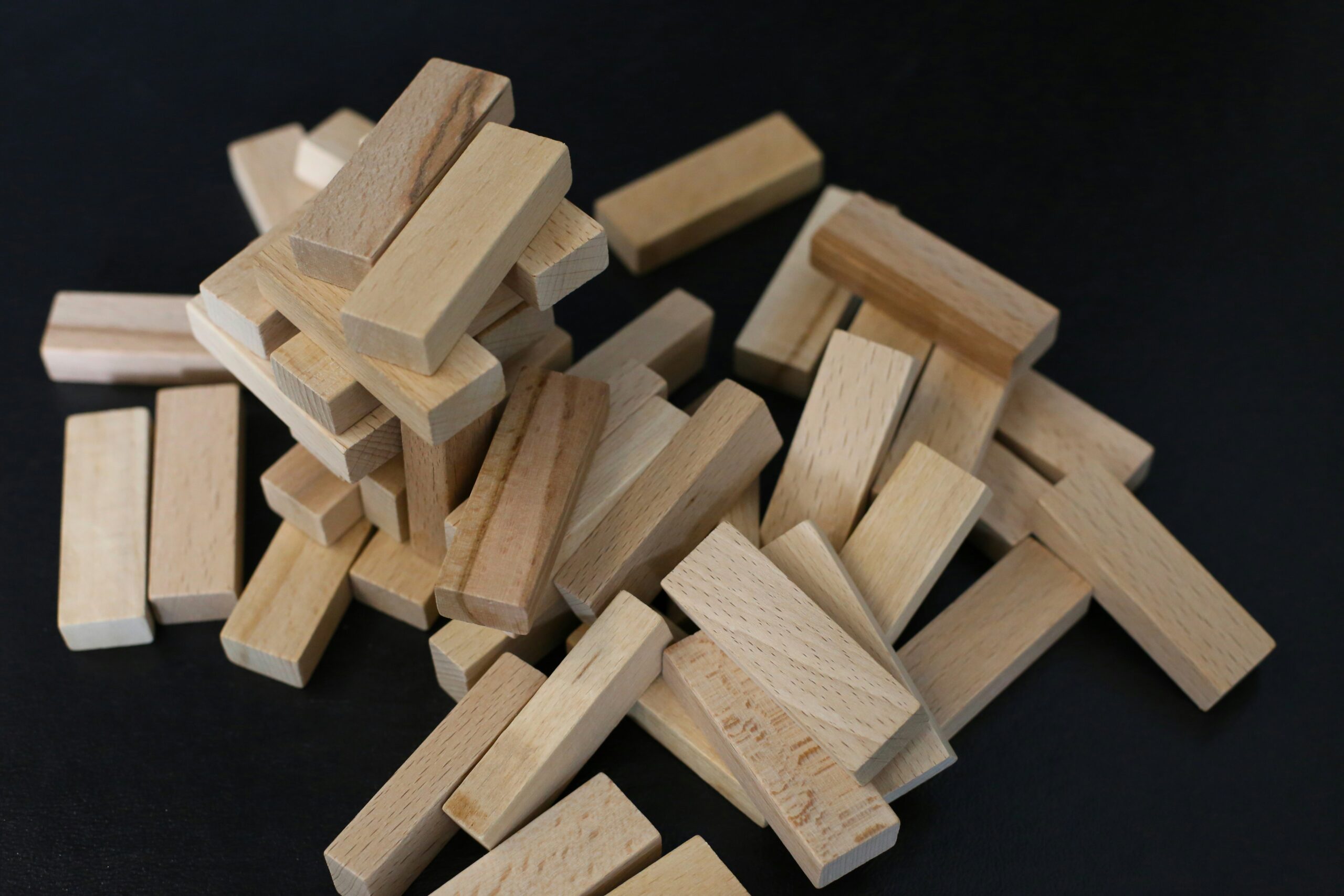
But more and more, it looks like a Jenga tower to me. Every year we add new blocks on top, faster and higher, while underneath someone keeps pulling pieces out. The tower gets more impressive and more nervous at the same time. And the blocks are not only made of code and cables. Quite often, they are made of people.
We keep adding blocks anyway. Cameras, cars, televisions, fridges, all connected, all talking to each other. A month ago, on the night of 11 October, someone broke into the refrigeration systems of hundreds of French supermarkets and quietly switched them to defrost. By morning, some fridges had reached around 50 degrees. Food was thrown away by the ton, and some equipment caught fire. On 2 November it happened again, in more than 100 shops across Europe. Nobody has claimed responsibility.
I sometimes look at the remote control on my sofa and wonder when it stopped being a remote and started being a door. And once you see one door, you start seeing them everywhere: in the car that updates itself at night, in the phone that knows where you are, in the watch that counts your heartbeats.
Maybe the lesson is less technical than it seems. We cannot hold the tower up on our own, and we are not going to stop building. What we can do is know where our single points are: the one app, the one provider, the one person everything depends on. Keep a plan B for what matters. Spread a little of our life across more than one place, because this week it was Microsoft, and next time it could be anyone. And make some peace with uncertainty, the weather we now live in.
The tower is still standing, and it is beautiful. Before we add the next block, though, it might be worth looking down once in a while, to see what is holding it up.