I’m Italian, so I’m supposed to see the glass half full.
I founded a benefit corporation, so I’m supposed to believe in change, in transformation, in the good that lies dormant in people and systems.
And yet, and yet, and yet.
This is not the world I hoped for.
Open any news outlet.
Wars spread like wildfires, faster than we can explain why they started. Children and mothers get shot. We speak constantly about weapons, military systems, nuclear deterrence. Inequality is no longer a crack: it’s a canyon. The climate is collapsing. Suffering is everywhere.
And then, of course, there’s AI. I work with it. I study it. I live with it. I’ve seen how quickly things can slide into dystopia when power meets carelessness.
That said, the harshest blow doesn’t come from the screen.
It comes from the streets.
No matter the city I find myself in (and you know I travel a lot), I see hate. I see fear. I see anxiety carved into people’s faces like permanent etchings.
At some point, each of us seems to face a brutal choice: numb ourselves from the pain, or stay open and risk drowning in empathy. No third way. Or so it seems.
A few weeks ago, I spoke with a theology professor. He has spent decades analyzing encyclicals, homilies, papal speeches. He told me something I haven’t stopped thinking about: every Pope of the last few centuries has, at least once, said the same words: “In these difficult times we are living through…”
And I paused.
Is it just a rhetorical habit? A theological reflex? Or is something else at play?
I’ve lived long enough to know, or at least to feel, that these times are different. Harder. Heavier. Less naïve. For a while, I thought it was just me, an age thing. A step out from adolescence and a confrontation with adulthood.
But then I realized: no. It’s not just perception. It’s reality.
I mean, I’ve read Factfulness. I know the data.
We live longer. We drink cleaner water. We’ve lifted millions out of poverty. We’ve defeated diseases once deemed invincible.
In many measurable ways, the world is better than it was a century ago.
That said, I can’t bring myself to feel optimistic. Optimism, in this moment, feels not just fragile. It feels foolish.
And yet (because there’s always a “yet”) I refuse to be a pessimist. Pessimism is heavy. It drags. It stalls. It doesn’t even mourn. It just collapses.
So what remains?
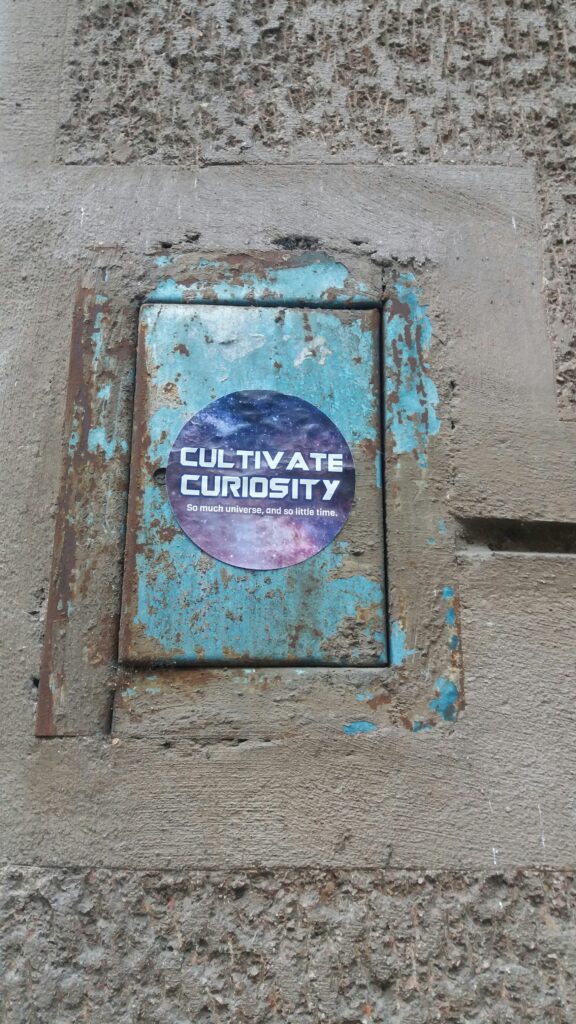
I guess curiosity can be a good answer.
Curiosity doesn’t promise that things will get better. But it invites us to explore how they might. It doesn’t deny pain. It interrogates it. It asks: where does this come from? What is it teaching us? What can we still do?
Curiosity doesn’t claim certainty. But it seeks movement. It searches not for happy endings, but for meaningful next steps. It’s the question mark where optimism insists on a full stop. It’s the child who keeps asking “Why?” even when the answers are hard, or vague, or incomplete.
Curiosity is the voice that wakes me up in the morning and whispers: “Let’s see how far we can go. Let’s see what we can build. Let’s see how this story unfolds”.
Not because I believe it will end well, but because finding a reason to show up still matters.