So, you know I have a new book just released (here’s the link if you want to buy it).
This is a little behind-the-scenes story about how it came to life.
After signing the contract, I did what “any author whose main job is running a business” would do. Early wake-ups, late nights, weekends sacrificed. Reading, researching, drafting, revising… In other words: the classic productivity package.
But after a few weeks, I realized what I was putting on the table wasn’t enough.
Or better, it wasn’t right for the kind of book I had in mind. So I decided to create a period of full reflection spending some time with the monks. (Details below.)
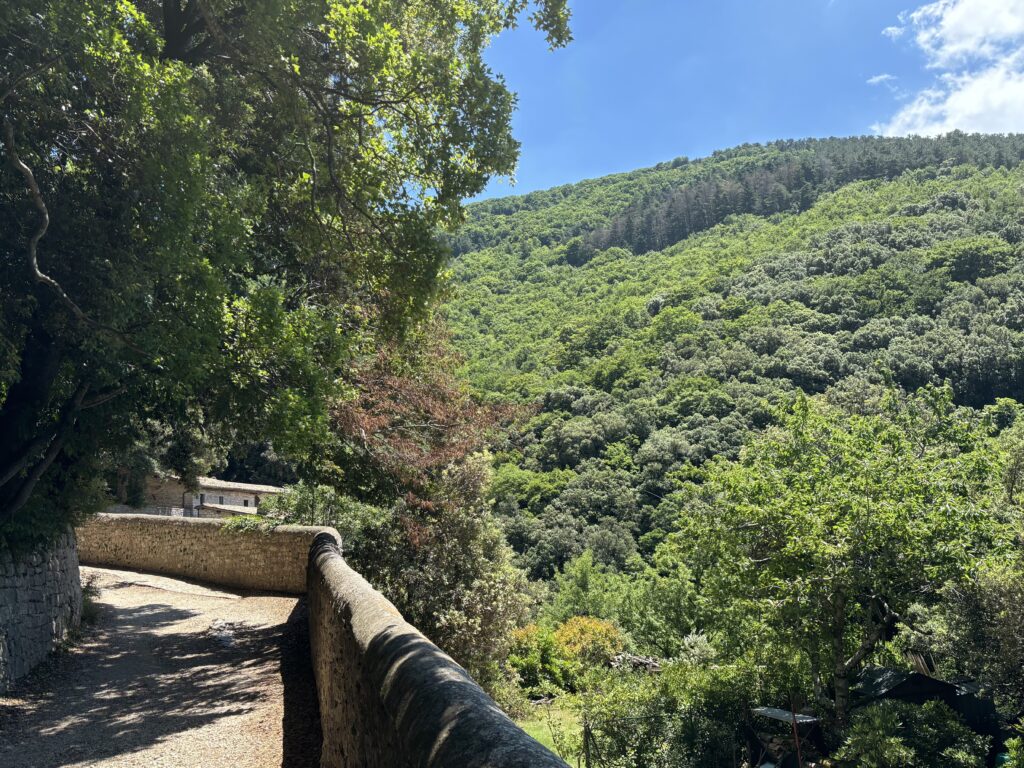
I chose a place I love (Assisi), a group of monks I liked, and I spent a few weeks beforehand reorganizing my schedule to make space for this small retreat. Days with no workshops, no lectures, no meetings, no projects, no client work. Just me, my thoughts, and a handful of monastic routines, perfect for bringing a bit of rhythm to a life that often feels like a roller coaster.
The original plan was to stay in the monastery for two weeks. Ten business days (or fourteen, if you’re a workaholic and still count weekends as “extra working days” instead of time for well-deserved rest). But after some back-and-forth with the calendar, I realized it was impossible. My agenda was too demanding, so I split the retreat into two smaller sessions, six weeks apart.
When I finally arrived at the monastery, I tried to disconnect from the world.
Or at least, that was the theory… because despite the lack of 4G and 5G, I quickly realized the monks did have Wi-Fi.
Why those two weeks, then? For one simple reason: I needed to think.
I needed to think about the structure. And structure in books is like strategy in business: essential, invisible, and underestimated. It takes most of the time, yet once it’s done, everyone assumes it was obvious from the start.
During this period, I asked myself dozens of questions. Should I include interviews? How many? What about case studies? Two parts, three, four, or just one continuous flow? What tone of voice should I use? Should I add tips and tricks or keep it more narrative?
Yes, I wrote a bit. But mostly, it was time to re-design the concept.
You might ask: wasn’t all of this already in the table of contents? Fair point. Every author submits one when they sign a contract. But I told the publisher that my table was just a starting point, and that many things would likely change once the real work began. Let’s just say my instinct was right.
Looking back, those two short periods of silence were tough, but incredibly rewarding.
I came back with clearer ideas, a sharper vision, and the kind of emptiness you need to go the extra mile. I invested time (and paid for it later, when my schedule collapsed), but I earned far more than I spent.
Despite my natural tendency to procrastinate, writing and editing went surprisingly smoothly. Years of working with those topics helped, of course, but it was that quiet time that made the real difference.
Now, when I look at the finished book, I know that without those days with the monks, it would have been a completely different project. Closer to the table of contents, perhaps. But less human.
Sometimes we need time to think before we write.
Sometimes we need time to strategize before we act.
Whether it’s a book, a company, or a transformation, there’s nothing wrong with pausing to design the path. We are not machines, and we tend to forget it.
And then, of course, there are the monks.
When they met me, they asked:
“Are you here to know God?”
“No, I already know Him.”
“To find yourself?”
“Not really, I’m already good.”
“So why are you here?”
My answer was simple. “Because I have a book to write. And I like to finish what I start.”
In the end, that might be the most spiritual reason of all.