A few weeks ago I was in London. I needed a coffee, and I found a café with an inviting entrance and a brand I instantly liked: “Black Sheep Coffee”.
I ordered my coffee. I waited. And somewhere between the grinder and the milk, my mind left London.
I was a kid again, in one of those stationery shops that smelled of paper, erasers and new pencils. On the shelves there was a brand called “La Pecora Nera”. The black sheep, in Italian. I could not have told you why, but their items fascinated me, and I bought a lot of things from them. Then, at some point, the brand disappeared. Maybe it failed, maybe it just moved on. I never found out.
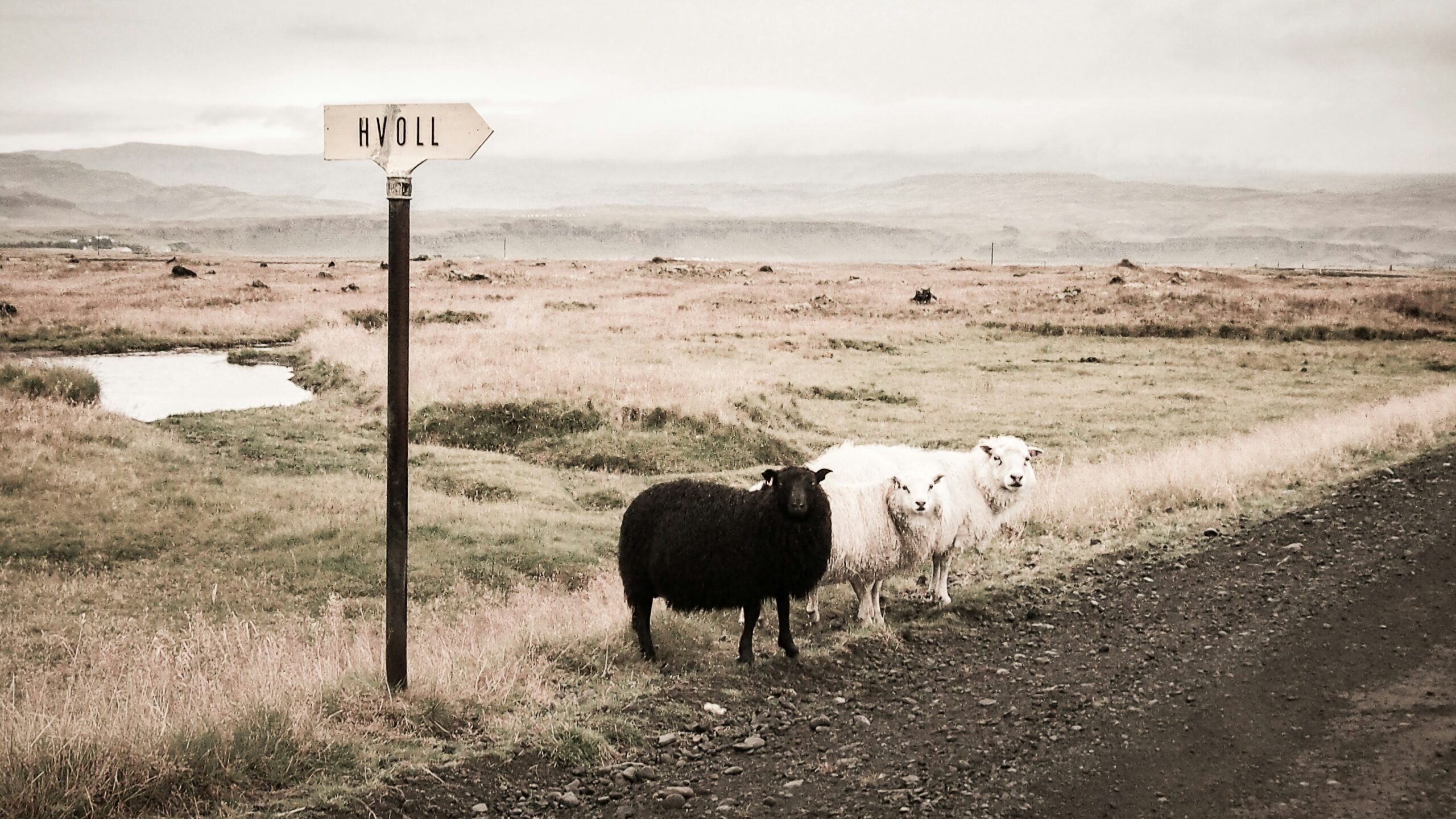
A couple of minutes later, while my mind was still wandering about pencils and diaries, my phone buzzed. A message from a friend: a picture of a black sheep among a few white ones, and a few words. “This reminds me of you.”
Sometimes the mind makes strange associations. Some people call it destiny. Others call it serendipity. On quieter days I simply call them connections: small threads the mind ties together while we are busy doing something else. Three black sheep in the space of one coffee felt like a sign. And I told myself that it was time to write a blog post about black sheep”.
The inspiration, unfortunately, took a few weeks to show up.
*
In most families, teams and offices, there is someone who does not quite fit. The one who asks the question nobody wanted to hear. The one who leaves the safe job, changes city, picks a different path, or simply laughs at the wrong moment.
Society tends to treat that person as a problem to fix, but I have always been drawn to another reading, the one offered by Bert Hellinger, the German therapist who developed Family Constellations. In his view, the black sheep of the family are the ones searching for new paths of freedom for the whole family tree. In other words, black sheep are the ones doing work on behalf of everyone. Maybe they feel the weight of what the system prefers not to look at, and they move first so that others can move later. Or maybe they simply remind the world that uniqueness runs in the family too.
I find the idea comforting, mostly because it turns “you are different” from an accusation into a role. Sometimes a heavy one, sometimes a lonely one, but a role all the same.
Being the black sheep has a cost, and it would be dishonest to pretend otherwise. You stand out, so you get noticed. When things go well, people call you brave. When they go badly, they call you stubborn. Often it is the same decision, seen a few months apart. That cost shapes people in different ways. Some grow a huge ego, a kind of armour against a world that does not quite fit them. Others go the opposite way: they shrink, apologise, and try to blend into the flock.
And yet, the black sheep I admire the most seldom makes a fuss about it. Uniqueness is rarely loud. Most of the time it is quiet. It does not need to win the argument. It just needs a little space to exist.
So here is my small invitation, whatever the colour of your fleece: make room for the black sheep around you.
They are the colleague who asks one question too many in a meeting. The cousin who never quite followed the family script. The friend who changed everything at forty and still gets asked when she is going to settle down. Before labelling them, ask yourself what they might be seeing that you are missing. Because yes, they may be difficult, but they might also be a few steps ahead.
And if you feel like it, be one. It can be a small thing: saying no when everyone expects a yes, taking the road with fewer signs, or laughing at the wrong moment without apologising for it.
In a world full of copies, being yourself takes a little courage. Copies are easy to make and easy to replace. Originals carries a story, a few scratches, and the marks of every choice that made it different, and beautiful.
As for my friend, I sent her a reply: “Thanks for the pic. I am taking it as a compliment.”