Imagine a finance minister who opens the yearly report with how many hours people slept and how much time they spent with their families, and only then gets to growth figures. It sounds like a utopia. In one small country, it is closer to policy.
The funny thing is that the man who built the ancestor of GDP asked himself something similar. In 1934 Simon Kuznets, the economist who prepared the first estimates of national income for the United States (and later won a Nobel Prize), wrote in his report to the US Senate that “the welfare of a nation can, therefore, scarcely be inferred from a measure of national income”. He had just created the number, and he was already telling us not to take it too seriously.
Thirty-four years later, on March 18, 1968, Robert Kennedy stood in front of the students of the University of Kansas and went further. Gross national product, he said, counts air pollution and cigarette advertising, and ambulances to clear our highways of carnage. It does not allow for the health of our children, the quality of their education, or the joy of their play. “It measures everything, in short, except that which makes life worthwhile.” Less than three months later, he was killed.
So why do we keep looking at GDP as if it were the scoreboard of a nation? Probably for the same reason we look at the scale every morning, or at the number of likes under a post. It is easy to count. And what is easy to count slowly becomes what counts.
Then there is Bhutan.
In 1972 Jigme Singye Wangchuck became king of a small Himalayan country squeezed between India and China. He was sixteen. Not long after, instead of promising growth, he said something that still sounds naive to many economists: Gross National Happiness matters more than Gross National Product.
It could have stayed a beautiful slogan. It didn’t. In 2008 it entered the Constitution of Bhutan, which asks the State to “promote those circumstances that will enable the successful pursuit of Gross National Happiness”. Three years later, the United Nations invited its member states to look for better ways to measure wellbeing. And in Bhutan, the slogan became an index, measured through national surveys.
What I find fascinating is what they decided to measure. Nine domains: psychological wellbeing, health, education, time use, cultural diversity and resilience, good governance, community vitality, ecological diversity and resilience, and living standards. Thirty-three indicators in total. Think about it for a moment. A government that asks how you sleep, how much time you spend with your family and your community, whether you trust your neighbours, whether you still speak your language. Money is there too, of course. But it is one of nine.
I read that list twice. Most of the things I would put on my own list of a good day are there. But very few of them would ever show up in a GDP report.
The latest survey, based on more than 11,000 interviews carried out in 2022, found that almost half of Bhutanese (48.1%) are “deeply” or “extensively” happy, up from 40.9% in 2010. And there is one detail I keep thinking about: 41% of people in the richest fifth of the population are classified as “not-yet-happy”. Even in Bhutan, money ain’t the full story.
The first time I read about Bhutan, my mind went back to November 2014. One of those old-school Facebook challenges I spoke in one of my previous posts: share one happy moment a day. I kept going for years in a simple Word file, until it suddenly stopped opening a few days after day 3000. My backup ended at 2938. I smiled and took it as a sign.
When I look back at those entries, they read like a tiny GNH survey. Time use: a dinner in one of my favorite restaurants. Community vitality: an espresso shared with a friend. Psychological wellbeing: a walk towards San Luca (a very famous basil in Bologna). Living standards: a tasty gelato (being Italian helps). More than half of them are about food. Hardly any of them would move the GDP of anything.
You know, I spend a good part of my working hours on business plans, spreadsheets, and financial projections. A part of me likes numbers. Data don’t lie. But they rarely tell you about the emotional scenario.
Kuznets knew it. Kennedy said it out loud. A small kingdom in the Himalayas tried, imperfectly, to build a country around it.
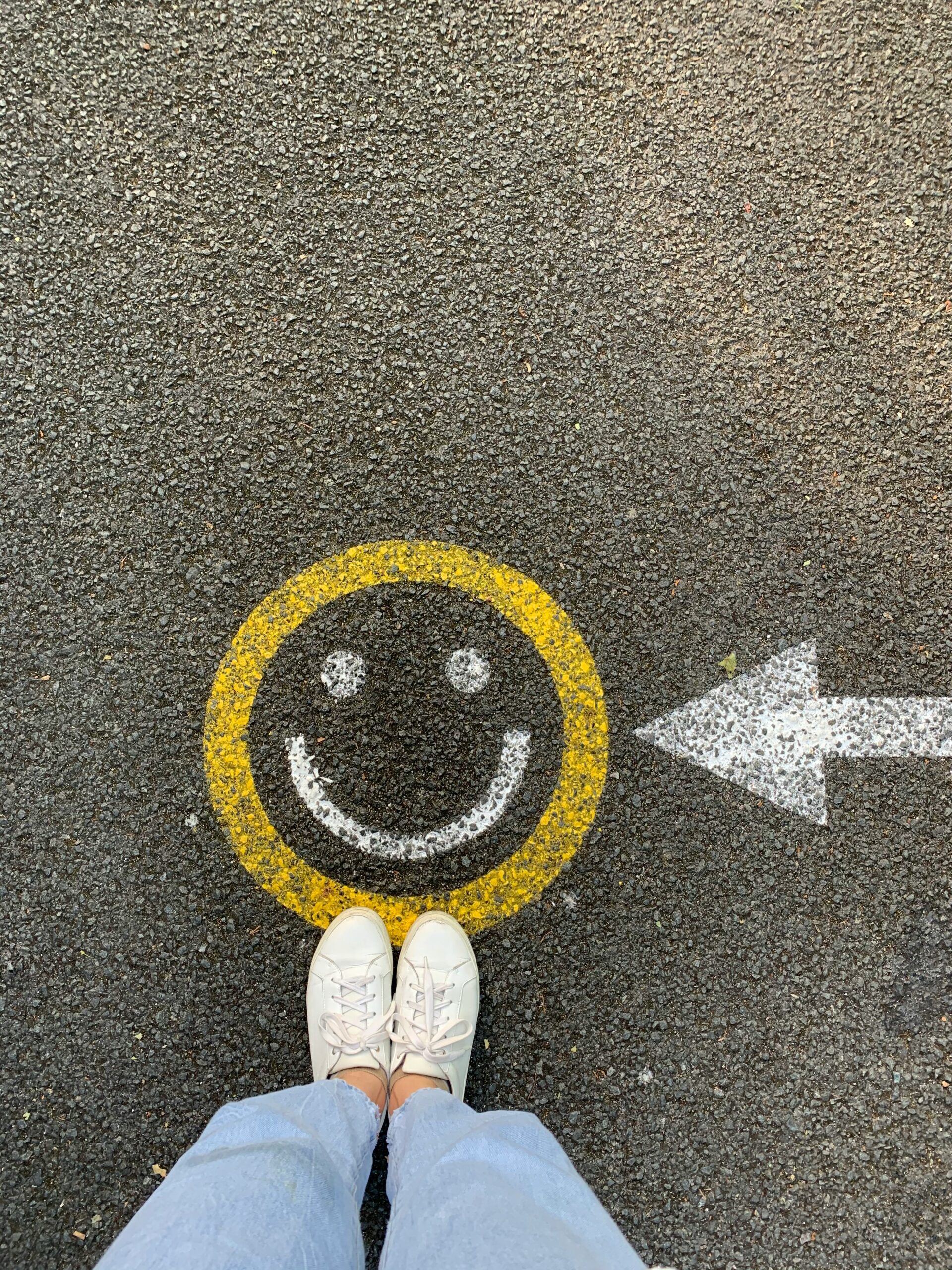
So here is my small proposal. Keep your GDP, and keep counting what grows. But next to it, open a second file. One line a day. Something that made the day worth living.
It probably won’t make you richer. It might tell you what for.