I use em dashes. Or rather, I used to. I like the pause they create: more deliberate than a comma, more connected than a full stop. I use constructions like “it is not X, it is Y.” I reach for parallel structures because they help me think. Or at least, I used to.
The problem is that now, when I write this way, people assume I did not write it at all.
These patterns have become markers of AI-generated text. The same structures I absorbed from years of reading, from legal drafting, from the kind of prose I was drawn to long before large language models existed, now trigger suspicion. And in a way, that makes sense. The models were trained on the same material I grew up reading: great authors, academic papers, the literature that shaped how I think and how I put sentences together. We drank from the same well. The difference is that one of us is a machine.
It is a strange feeling: to write in your own voice and have it sound as though it came from somewhere else.
But this is only part of a larger reflection. AI is the third time my writing has changed, and each time the change has gone deeper than I expected.
The first shift happened when I stopped writing by hand.
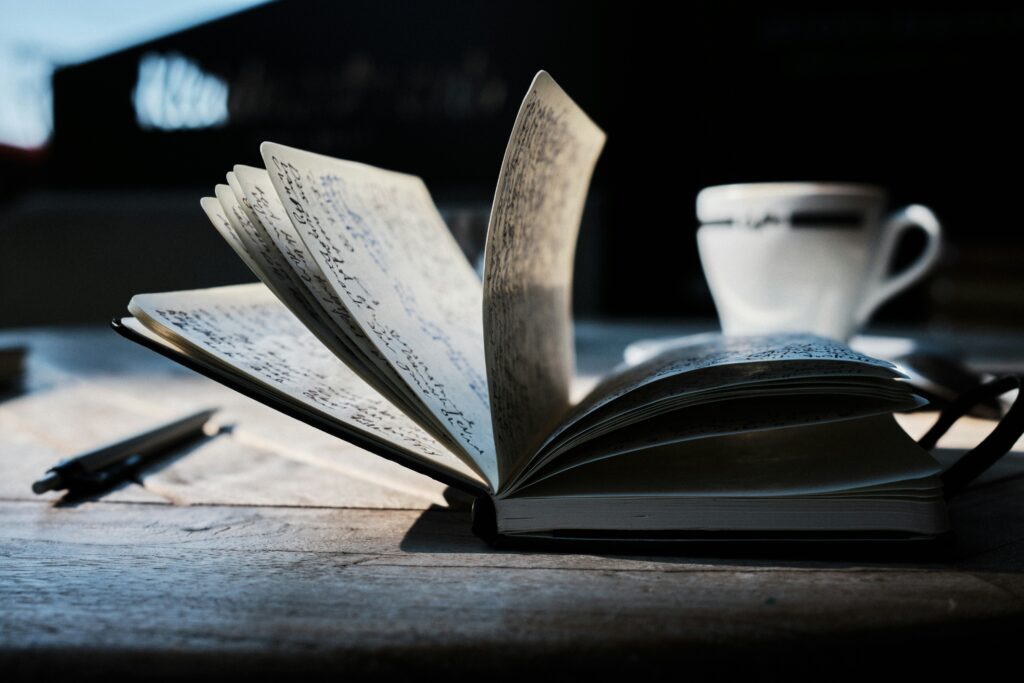
I wrote with a pen for years. I took my bar exam with pen and paper, drafting legal opinions and summonses by hand, page after page. When you write like that, you have to think before the ink touches the page. You plan the sentence in your head because crossing it out is visible, messy, a reminder that you did not think it through. You slow down. You structure before you produce.
Looking back, it feels almost like being a scribe, the kind who sat with ink and quill and had to get it right the first time. Look at the letters of great authors from centuries ago: written by hand, clean, composed, almost unnervingly final. No visible second thoughts on the page. They may have drafted extensively before that, of course, but by the time pen met the clean sheet, the thinking had already been done.
There is something else about writing by hand that is easy to forget. You are alone with the page. There is no browser tab open in the background, no reflex to Google something mid-sentence, no temptation to check a source before you finish the thought. The constraints are physical. Your references are whatever you brought with you or stored in your memory. That limitation shapes the writing itself: it tends to be more linear, more deliberate, and in some ways more honest.
Then came the computer. Word. Copy and paste.
That changed everything. Writing became faster, but also looser. You could move paragraphs around like furniture, rearranging them until the structure felt right. You could write in fragments and assemble them later, building the text like a collage rather than a continuous thread. In the legal world, the shift was even more pronounced. You rarely start a contract or a policy from a blank page. You start from a template, something already drafted for a similar situation. Sometimes finding the right one takes longer than the actual writing. But once you have it, the work flows downhill.
Revision also became invisible. On paper, crossed-out words and arrows tell the story of your edits. On screen, the final version looks as though it arrived clean on the first try. Unless you choose to track changes, the struggle disappears. The process hides behind the product.
There was, of course, an intermediate era: the typewriter. But I never truly lived through it, even though my grandfather bought me one, an Olivetti Italia 90, when I was seven. I used it, and it was on that machine that I learned the QWERTY layout, but I was too young for it to leave any real mark on the way I worked. Looking back, I moved almost straight from pen to keyboard. My first Macintosh, another gift from him, arrived when I was nine.
Now we are in the age of AI. And this shift feels different in a way that is worth naming.
With a pen, you write. With a computer, you draft, cut, paste, and rearrange. With AI, you can delegate. You describe what you want, and something comes back. You evaluate it, adjust it, redirect it. The relationship between the author and the text becomes one of direction rather than execution. You are still the mind behind it, but the hands are no longer yours. Some have started calling this “distant writing,” and the term feels right. You remain present in the intention, but more removed from the production of each sentence.
That shift matters. But the bigger one may be volume.
When content becomes effortless to produce, its volume explodes. In a world overflowing with words, attention becomes the scarcest resource. The fear is no longer just writing badly. Now you can write well and still remain invisible.
The way people read has changed as well. People skim more, stay less, and commit less fully to the page. Scanning has replaced reading. The bar for keeping someone on the page has risen, while the effort required to fill that page has fallen. That asymmetry is what concerns me most.
AI has real benefits. I can use it for inspiration, translation, research, even to test how a sentence lands in another language. But I can also start censoring my own voice: avoiding certain structures, stripping away patterns that now scream “generated,” trying to sound more human by sounding less like myself. And to me, there is something deeply wrong with that. Changing the way I write because an algorithm learned to write like me feels like giving up territory I was on first.
I do not have a clean answer. I think the best response is to keep writing things that are worth the time they take to read. To be direct when I can. To be personal when it matters. And to accept that my voice will sometimes sound like a machine’s, because the machine learned to sound like people, and I happen to be one of them.
The tools change. The thinking stays.
That, at least, is the part worth protecting.