So here we are again. Lent time.
Forty days (well, forty-six if you count from Ash Wednesday until Easter) of renouncing something and voluntarily removing a small piece of comfort from our daily lives. According to the New Testament, Jesus spent forty days in the desert before starting his three years of ministry. Those days were not only about fasting. They were about temptation, discipline, and preparation. The Gospel tells us that he met the devil himself during that time, who tempted him in a very smart and sneaky way. But that is another story.
What interests me more is the symbolic dimension of those days. A pause before action. A voluntary retreat before moving forward.
Interestingly, this year Lent and Ramadan began on the same day. That does not happen very often. Two traditions, two different spiritual universes, but a surprisingly similar intuition. Fasting as a way to clean yourself, to create distance from the physical world, to reconnect with something higher than the constant noise of everyday life. Whether one approaches it from a religious perspective or simply as a human exercise in discipline, the idea remains powerful. Once a year we create a small desert in our lives. And deserts, as we know, are places where things become clearer.
I will not tell you what I decided to renounce this year. Some decisions work better when they remain private.
But I can tell you something else.
I created a WhatsApp group with a few friends who also decided to give up something during these forty days.
If you know me, you know that I like enthusiasm. I like collective campaigns and the energy that appears when people share a challenge. There is also a small psychological trick involved. Sometimes the best way to stay motivated is to motivate others. Helping someone else remain disciplined often reinforces your own discipline.
A few days after we started, one of the guys in the group wrote a message. His challenge was no sweets for forty-six days. But after a few days he failed. He had eaten something sweet and felt that he had already ruined the whole effort.
So I told him something simple: “You fall seven times, you stand up eight”. It is an old Japanese proverb that I have always liked. It captures something essential about discipline. Falling is part of the process. What matters is getting up again.
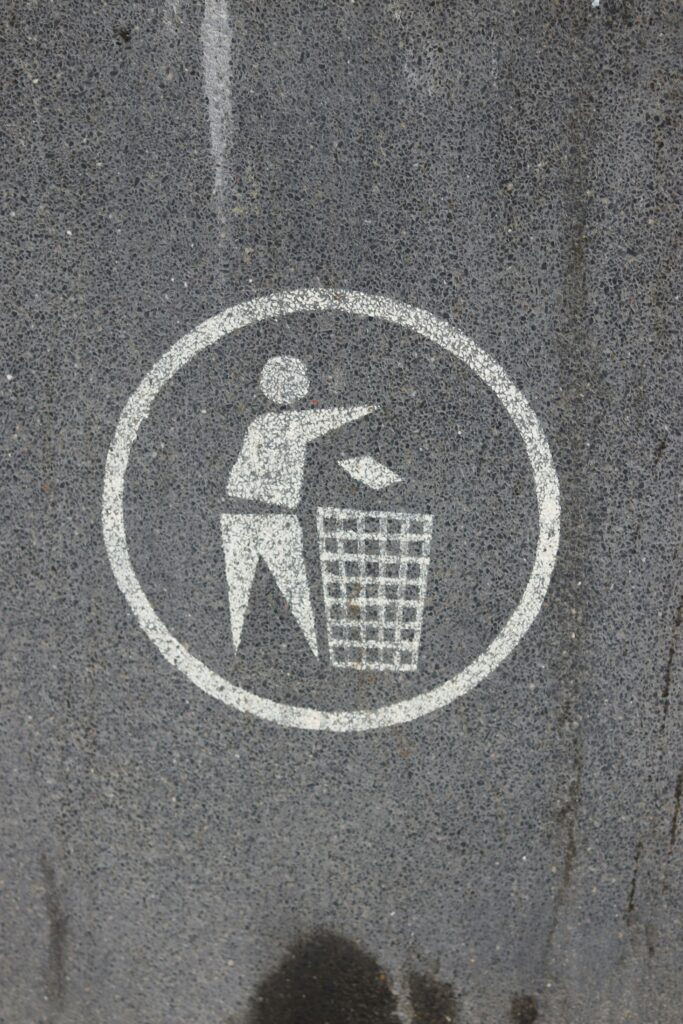
Then I added something else. I told him to be careful about what I call “the trash can” effect.
He immediately asked me what that meant.
The trash can effect is simple. One mistake becomes the excuse to throw the entire effort away.
Imagine that you decide to avoid junk food for a month. You do well for a week, maybe even two. Then one evening something happens. You are tired, stressed, or simply distracted. You end up at McDonald’s.
At that point a voice appears in your head.
“Well, I failed.”
And then something strange happens. Because you failed once, you end up throwing the entire project into the trash. Worse still, you do the same thing the next day. And then again. And again. Shame begins to accumulate, and sometimes leaves you in a worse place than where you started. What should have remained a single exception slowly turns into a complete abandonment of the goal.
Do you want another example? You decide to go to the gym every day for a month. For a couple of weeks everything works well. Then one day you cannot go. Maybe work takes longer than expected, or life simply interferes. Instead of seeing that day as a small interruption, the internal narrative changes.
“I broke the chain.” And because the chain is broken, the next day you do not go either. And maybe not the day after. One missed session slowly turns into a lost week.
Psychologists sometimes describe a similar mechanism as the “what-the-hell effect.” One mistake creates frustration, and frustration makes people abandon the entire plan. It is a surprisingly common trap when we try to build new habits.
Our brain loves simple stories. Success or failure. Discipline or weakness. Either we are doing perfectly or we are doing terribly.
But habits rarely grow in such a clean way. They develop through repetition and small victories. Each time we repeat a positive behavior the brain rewards us with a small chemical signal, a little dose of satisfaction that says: keep going.
Building habits therefore requires something less dramatic than heroic discipline. A more patient form of discipline works better. Start small. Build something that can survive small mistakes. Accept that consistency and perfection are two different things. Failing once rarely destroys a habit. Opening the trashcan does.
Believe me, I know this well: I have opened that trash can many times in my life. With diets, with physical activity, with writing streaks. With projects that began with enthusiasm and then slowly faded away.
And over time I learned a small rule.
Never let a bad day become a bad week.
Close the trash can.
And start again tomorrow.